
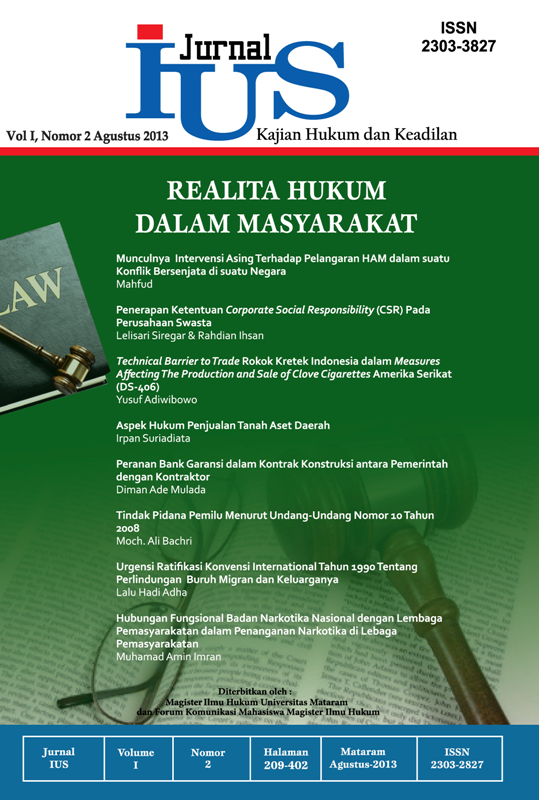
THE URGENCY OF RATIFYING THE 1990 INTERNATIONAL CONVENTION ON THE PROTECTION OF THE RIGHTS OF ALL MIGRANT WORKERS AND MEMBERS OF THEIR FAMILIES
Abstract
The International convention on the protection of the rights of all migrant workers and members of their families explicitly regulate the rights described in the Human Rights International Standards. Several main points of the Convention of the Rights of Migrant Workers are that these conventions contribute a normative-comperhensive frame to execute national and international migration policy based on Law provisions. Those conventions provide a right-basic approach frame but not merely a human rights agreement. The conventions built a parameter for national policy and regulations and engage an agenda to consultation and cooperation among countries on the most relevant issues such as information exchange, elimination of the unregulated migration, migrant smuggling and human trafficking. The convention covered the whole migration process of migrant workers and their family members such as preparation, departure and transit, their living in the working destination country, homecoming and reintegration at their home country or domicile country. Therefore through a normative legal study with conceptual and analysis approach, this study will further find out the urgency and motivation for the state to ratify this convention.Keywords: Urgency, Ratification, Migrant Workers.
Downloads
References
Badan Pusat Statistik, 2007, Analisis Perkembangan Statistik Ketenagakerjaan (Laporan Sosial Indonesia 2007), Jakarta, BPS
KOMNAS PEREMPUAN. 2006. Reformasi Dibelenggu Birokrasi “Catatan Hasil Pemantauan Awal terhadap Inpres No.06 Tahun 2006 Tentang Kebijakan Reformasi Sistem Penempatan dan Perlindungan Tenaga Kerja Indonesiaâ€. Jakarta. CV Harapan Mandiri.
KOMNAS PEREMPUAN. Lembar Info, Pentingnya Meratifikasi Konvensi Migran 1990, Konvensi tentang Perlindungan Hak-Hak Semua Pekerja Migran dan Anggota Keluarga, edisi 1, april 2006
Organisasi Perburuhan Internasional, 2006, “Penerapan Perundangan Indonesia Untuk Melindungi dan Memberdayakan Pekerja Migran Indonesia: Beberapa Pelajaran dari Filipina†Jakarta, Kantor Perburuhan Internasional, ISBN : 978-92-2-018694-7
Organisasi Perburuhan Internasional, Tren ketenagakerjaan dan sosial di Indonesia 2011: Mempromosikan pertumbuhan lapangan kerja di tingkat provinsi, Kantor Perburuhan Internasional, Jakarta, cetakan pertama 2012
Organisasi Perburuhan Internasional, “Tinjauan Permasalahan terkait Pekerja Rumah Tangga di Asia Tenggara†Jakarta, Kantor Perburuhan Internasional, 2006
Chris Manning dan Haryo Aswicahyono,Perdagangan di Bidang Jasa dan Ketenagakerjaan: Kasus Indonesia Kantor Perburuhan Internasional Jakarta, 2012
Ingrid Blokhus, Perlindungan Sosial Buruh Migran Perempuan Study Perbandingan Antar Negara-Negara Pengirim, Ringkasan Eksekutif, Jakarta, Desember 2004
Adha Hadi, Lalu, Pekerja Pelaksana Rumah Tangga Dalam Persfektif International Labour Organisation (I L O), Dalam Majalah Ilmiah Hukum Dan Masyarakat, Fakultas Hukum Universitas Jember, No 3 Tahun 2010
Warta ILO, Indonesia Negara Pertama di Dunia Adopsi Pakta Lapangan Kerja Global ILO, Edisi dua Bahasa Juni 2011
Prosiding, Seminar dan Lokakarya, Perlindungan Sosial untuk Buruh Migran Perempuan Jakarta 2 – 3 Mei 2006
Anannya Bhattacharjee and Ashim Roy, Asia Floor Wage and global industrial collective bargaining, International Journal of Labour Research Geneva, International Labour Office, Volume :4, 2012
Indras Cahya Ningrum dan Ahwan Rudianto, Peran ILO Dalam Penyelesaian Kasus Ketenagakerjaan, Jurnal SOSEKHUM Volume 4 No 6 Maret 2009
Warta ILO, Mewujudkan Pekerjaan Layak Di Indonesia, Edisi Dua Bahasa Desember 2012
Stéphane Lalanne, Posting of workers, EU enlargement and the globalization of trade in services, International Labour Review, Volume 150 Desember 2011
Published
How to Cite
Issue
Section
The authors hold the copyright. Authors retain copyright and grant the journal right of first publication with the work simultaneously licensed under a Creative Commons Attribution-ShareAlike 4.0 International License. that allows others to share the work with an acknowledgement of the work's authorship and initial publication in this journal. How ever the author should affirming that the article is their original work should accompany the article via online submission form. Authors are permitted to share a Preprint of their article anywhere at any time. Link Declaration of originality (PDF)





